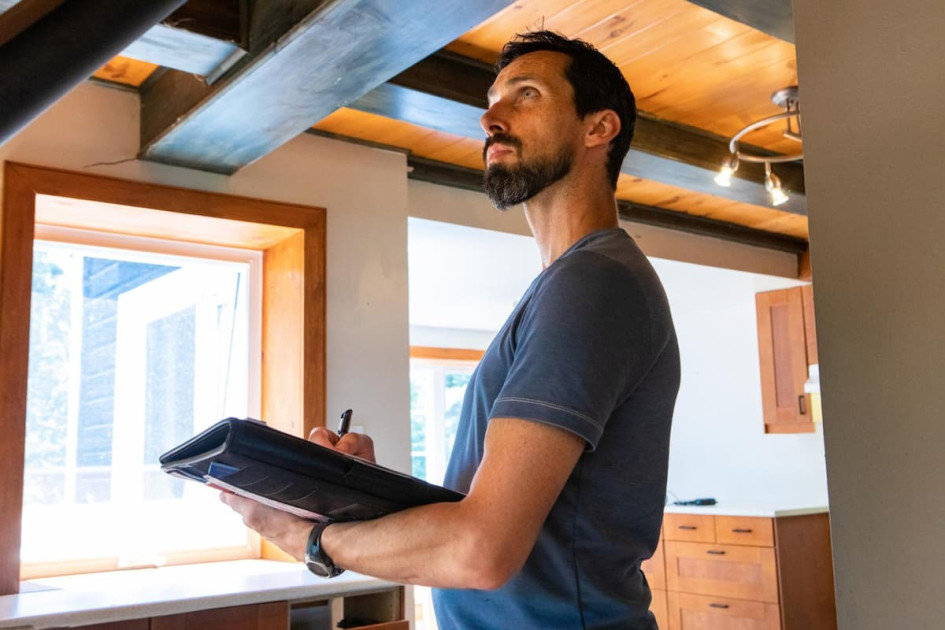
Before signing the arras contract (the Spanish deposit agreement that usually precedes completion), you should check who is entitled to sell the property and what charges it carries, its paperwork and planning status, its physical condition and the total cost of the purchase. If it is an old house, a masia (traditional Catalan farmhouse) or a home by the sea, further checks are needed. This guide explains what to look for when buying a house in Spain, helps you put those checks in order and shows when you need a surveyor or a lawyer.
A timely review can uncover debts attached to the property, undocumented building work, damp or restrictions on holiday lets. Documents and viewings must be cross-checked against each other: none of them, on its own, tells the whole story of the property. At Costa Brava House we help you organise these checks.
Before going into detail, this table sums up what to check, where to get each piece of information and what risk you avoid. It applies equally to a resale home and to a renovated flat.
| What to check | Where to check it | Risk you avoid |
| Ownership and charges (mortgages, attachments, usufructs) | Nota simple from the Land Registry | Buying without knowing who owns the property or what charges are registered |
| Floor area and description | Cadastre + nota simple + viewing | Leaving significant discrepancies in floor area or legality of works unresolved |
| Cédula de habitabilidad (habitability certificate) | Seller / Agència de l'Habitatge de Catalunya | Problems with residential use, utility connections or mortgage finance |
| Energy performance certificate | Seller (registered with ICAEN) | Not knowing the estimated energy performance |
| ITE (building inspection) and certificate of fitness | Owners' association or seller | Building works or costs that have not been assessed |
| Owners' association debts | Certificate from the secretary or property manager | Becoming liable for certain overdue fees |
| IBI (property tax) up to date | Latest paid receipt | Tax debts attached to the property |
| Planning compliance | Town council (licences and planning) | Extensions or pools without planning consent |
| Technical condition | Viewing + building surveyor's report | Damp, cracks or outdated installations |
The legal review is the first thing to do and the cheapest. If it fails, there is no point in assessing the condition of the house.
The nota simple is an extract from the Land Registry (Registro de la Propiedad) showing the registered owner, the description of the property and any registered charges, such as mortgages, attachments, easements or usufructs. You can request it on the website of the Spanish Association of Land Registrars (Colegio de Registradores) or through its online portal. It does not replace checking for owners' association debts, IBI or planning status.
Request it when you start your checks and check the registry position again before signing. A seller's mortgage does not prevent the purchase, but you need to agree how the debt will be paid off from the sale price and who will handle its removal from the registry. Both steps must be documented. The Bank of Spain explains the difference.
Compare the floor area and description in the listing with the nota simple, the cadastral record available from the Cadastre's online portal (Sede Electrónica del Catastro), the plans and what you see at the viewing. Floor area is not always measured the same way, so a discrepancy does not in itself prove unauthorised building work. If there are extensions, porches or changes of use, ask for the relevant licences and check the planning file at the town council. Resolve any significant discrepancy before instructing a valuation or signing the arras contract.
Ask whether the property is let and request the tenancy agreement. A sale does not automatically end an existing tenancy, and pre-emption rights may also apply depending on the case. If you need vacant possession, make it an express condition and check with an adviser that it can be met lawfully. The Urban Leases Act (Ley de Arrendamientos Urbanos) governs these rights.
If the property comes from an inheritance, ask for the probate documents and check who must take part in the sale and whether the transfer can be registered. The property does not always need to be registered in the heirs' names beforehand; in some cases the sale can be registered directly. Have the transaction reviewed by the notary or a lawyer before the arras contract. See our guide on how to sell an inherited house.
In Catalonia there are specific documents and requirements worth checking when buying property. Some allow exceptions, so you should confirm which ones apply to the specific property.
In Catalonia, the cédula de habitabilidad certifies that a home meets the conditions required for residential use. Check that it is valid and that it matches the property. The Agència de l'Habitatge de Catalunya provides information on the procedure and the regulations, and OCU (a Spanish consumer organisation) offers an accessible explanation. The law provides for certain exemptions on transfer, which should be examined before accepting a sale without a cédula.
If it has expired, ask the seller to explain whether it can be renewed and agree how to resolve the matter before signing. If it cannot be obtained, find out why, what planning use is authorised and what the consequences are for utility connections and mortgage finance. The lack of a cédula is a warning sign, but it does not in itself mean the entire building is illegal. See the Catalan Right to Housing Act and the municipal file.
The energy certificate must be available from the moment the property is marketed and must be registered with ICAEN. An F or G rating indicates poorer estimated energy performance, but it does not on its own allow you to calculate actual bills, nor does it automatically require works. For a second home, also check the windows, roof, heating and air conditioning, and intended use. See the ICAEN guide. You can check the specific certificate in the official certificate search tool.
As a general rule, residential buildings must pass the technical building inspection (ITE) before they are 45 years old, although there are exceptions and deferrals; for example, for certain detached houses holding a valid cédula when they reach that age. If the ITE is required, ask for the report and the certificate of fitness, and check whether any measures are outstanding. The Agència de l'Habitatge de Catalunya sets out the cases; 3Cat explains the procedure in plain terms.
Read the full report, not just the certificate. Defects may require works and lead to service charges or special levies (derramas), but their scope and timing depend on the owners' association's decisions. Review the minutes, quotes, overdue amounts and amounts approved but not yet payable, and set out in writing how they are split between seller and buyer.
Ask for the planning licences and completion certificates for any extensions, enclosures, porches or pools. If they are missing, check with the town council what use and works are permitted and whether there are any planning enforcement proceedings. On certain specially protected land, action to restore planning compliance is not time-barred; the rule does not apply indiscriminately to all non-developable land. See the Catalan Planning Act. To check the planning status, use the Mapa urbanístic de Catalunya (Catalan planning map), then confirm the property's file with the town council.
The viewing is your chance to spot what does not appear on paper. Go in daylight, open cupboards, look at the ceilings and ask to see the storage room, garage and communal areas too.
If you are buying a flat or an apartment in a development, ask for the owners' association (comunidad de propietarios) debt certificate, the minutes of recent meetings and the amount of the service charge. Look for proposed or approved works, quotes, special levies and any disputes that could affect your use of the property.
In Catalonia, the property is liable for certain overdue community debts from the current year and the previous four. Ask for the certificate and also check approved costs that are not yet due. If it is suggested that you go ahead without the certificate, do not accept this without assessing the risk and documenting a solution. The rule is set out in the Civil Code of Catalonia; Sepin analyses how to verify payment of service charges.
An older house may need a more thorough technical inspection. The construction period helps you ask the right questions, but it does not allow you to diagnose the condition of a specific property. The table shows items worth checking with a surveyor.
| Approximate period | Items worth checking |
| Before 1940 | Condition of walls, roofs and beams; damp; renovations and documentation of works |
| 1950–1975 | Structure and joists; possible asbestos-containing materials; insulation and installations |
| 1975–2002 | Condition of installations, roofs, windows and doors, and possible asbestos-containing materials |
| 2002–2006 | Insulation, installations, later renovations and maintenance |
| Since 2006 | Compliance with the regulations in force at the design date, maintenance and later alterations |
High-alumina cement was used in certain periods and buildings; if there are signs of it, a surveyor will decide whether opening-up works or tests are needed. Asbestos-containing materials may also be present in old roofs, water tanks or downpipes. The risk depends on their condition and on whether fibres may be released, especially during building work. Any removal must follow the applicable regulations and be carried out by a licensed contractor. See the INSST (Spain's national institute for occupational safety and health).
If the house is old, has cracks or damp, or you plan to renovate it, ask a building surveyor (arquitecto técnico) or an architect for a quote for an inspection tailored to the property. The price depends on the scope; agree in writing which installations and elements will be inspected. The report can help you estimate the cost of works and negotiate before you make a financial commitment.
Taxes and other costs must be added to the sale price. For a resale home, Catalonia applies the general ITP (property transfer tax) in value bands, with reduced and special rates in certain cases. The table below shows the general scale in force when this guide was reviewed; confirm your specific case with the Agència Tributària de Catalunya (Catalan Tax Agency).
| Value band (general scale) | Marginal ITP rate |
| Up to €600,000 | 10% |
| Over €600,000 up to €900,000 | 11% |
| Over €900,000 up to €1,500,000 | 12% |
| Over €1,500,000 | 13% |
Example: if the taxable base is €700,000 and the general scale applies, the first €600,000 is taxed at 10% (€60,000) and the next €100,000 at 11% (€11,000): €71,000 in total. The taxable base may exceed the agreed price, for example because of the cadastral reference value. Before finalising your budget, check the taxable base and any reduced rates with the Agència Tributària de Catalunya. When buying a new-build home, the usual taxes are VAT (IVA) and stamp duty (AJD); check the rates and exemptions for your transaction.
Add notary and Land Registry fees, the valuation if you are applying for a mortgage and the gestoría (administrative agent) if one is involved. Ask for an itemised quote and check which mortgage costs are legally payable by each party. Also check these three financial points:
Buying on the coast or inland in the Empordà involves checks that a city buyer does not usually consider. These are the ones that raise the most questions among our clients looking for houses for sale on the Costa Brava.
If you want to use the property as a holiday let, first check that the activity is permitted in that property and municipality. In Catalan municipalities subject to Decree-Law 3/2023, a prior planning licence of limited duration is required; homes already licensed may be subject to a transitional regime. A seasonal let is not, in itself, equivalent to tourist use. Osborne Clarke analyses the regulatory change.
If the property is advertised with an HUTG number, verify the licence, the tourist registration, the municipal planning rules, the owners' association rules and the procedures for a change of owner. Ask the town council for written confirmation when the ability to let is decisive for the price. A registration number does not in itself guarantee that the activity can continue. See the official procedure for tourist-use homes. You can consult the information list of the Catalan Tourism Register, but do not treat registration as sufficient authorisation.
For seafront properties, ask for the boundary line of the public maritime domain (deslinde) and check whether the property is affected by easements under the Coastal Law (Ley de Costas). The protection easement is generally 100 metres, but there are cases of 20 metres and other specific situations. Do not infer the impact solely from the distance you can see on a map. Also check the effect of salt air on railings, balconies and window frames. The Ministry explains how to access the coastal boundary lookup; the viewer is for information only.
Many houses in Begur, Calella de Palafrugell, Llafranc or Tamariu stay closed for months. This encourages condensation damp, problems with pools and filtration systems, and faults in unused installations. If you view in summer, ask about winter maintenance and ask to see invoices for servicing of the pool, boiler or air conditioning.
On the Costa Brava there are urbanisations (residential estates) from the 1960s and 1970s that were never formally adopted by the town council. In these, owners may have to pay for the upkeep of roads, street lighting or the water network through a maintenance body (entidad de conservación), or face development charges. Ask the town council about the status of the urbanisation before committing.
Before buying a masia in the Baix or Alt Empordà, check the planning rules and the municipal heritage catalogue, and get written confirmation of what use and what works can be authorised. Being listed in the catalogue does not automatically grant permission to restore. Check access and easements, and ask for documentation on the well, water supply and sewage; the permits required depend on each installation and discharge. The Agència Catalana de l'Aigua (Catalan Water Agency) provides information on water rights. Browse our masias for sale on the Costa Brava. If you want to build, check the permitted building density with the council before you buy a plot on the Costa Brava. Check the planning status on the Mapa urbanístic de Catalunya and confirm possible uses and works with the town council.
The order matters: each check should be done before the financial commitment that would stop you pulling out without losing money.
None of these signs means you must walk away from the purchase, but all of them justify further investigation or renegotiation:
If you would like a legal team to review the documents for you, Costa Brava House offers property legal services that check charges, licences and contracts before signing. And if you are still deciding where to buy, you may find our guide to the best areas of the Costa Brava useful.